


Address:
1432 Park Street
Alameda, CA 94501

Scleral Lenses vs. Soft Contacts for Keratoconus: Why Alameda Patients Are Making the Switch This Fall
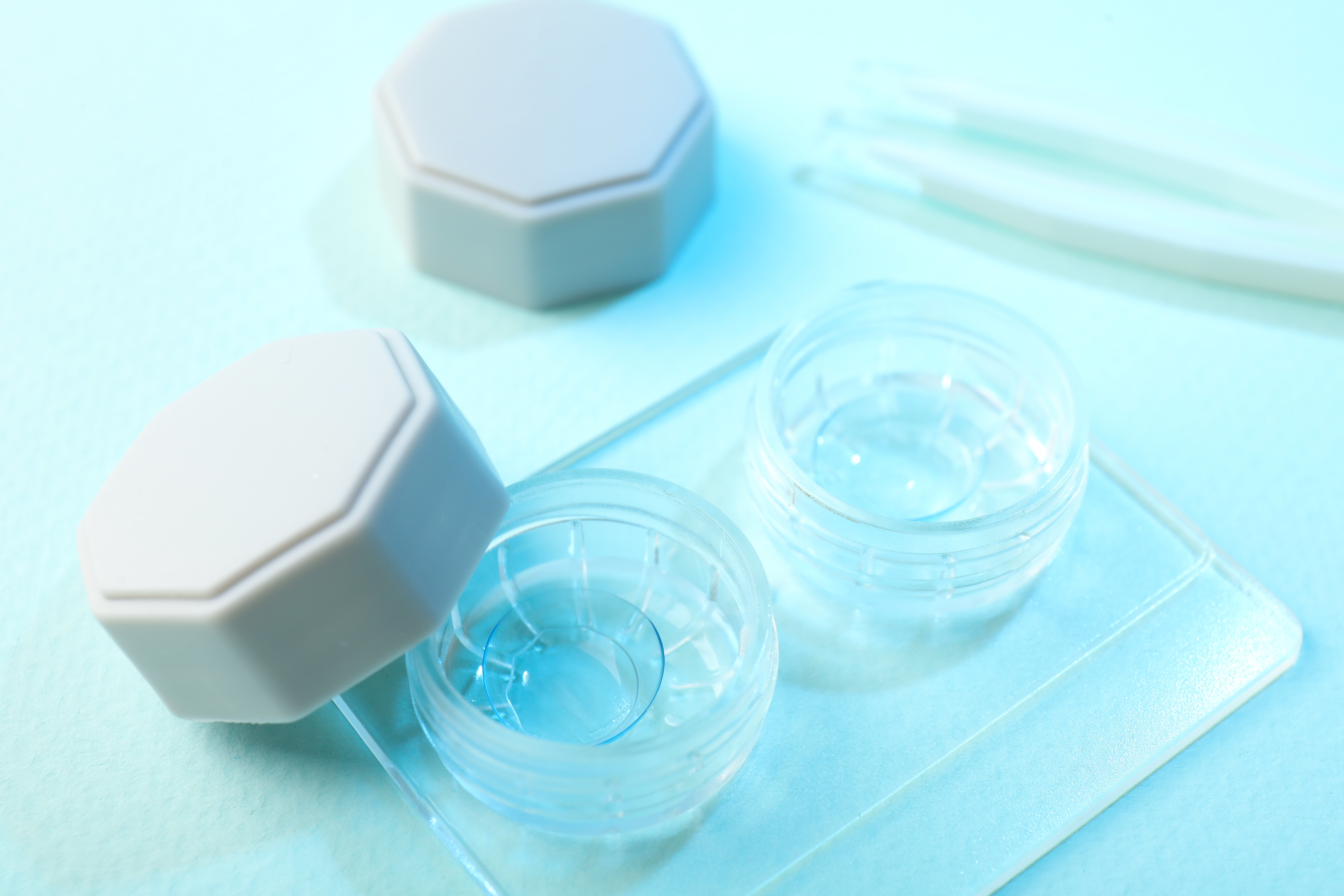
If you have keratoconus, standard soft contact lenses may eventually stop providing the clear, stable vision you need. As the cornea becomes more irregular, conventional lenses can move, blur, or fail to correct the distortion completely.
At Alameda Eyes Optometry, we provide specialty contact lens fittings for patients with keratoconus and other irregular corneal conditions. For some Alameda patients, scleral lenses offer a more stable alternative when traditional soft contacts no longer provide enough clarity or comfort.
Why Is Keratoconus Hard to Correct?
Keratoconus causes the cornea to thin and gradually develop a more cone-like shape. Instead of having a smooth, regular curvature, the cornea becomes irregular.
That irregularity can lead to blurry or distorted vision, increasing astigmatism, glare, halos, and frequent prescription changes. Glasses may help during earlier stages, but they do not physically create a smooth optical surface over the cornea.
Contact lens design becomes especially important as the corneal shape changes.
How Do Soft Contacts Work?
Soft contact lenses are flexible and rest directly on the corneal surface. Standard soft lenses work well for many common prescriptions because they conform closely to the eye.
That flexibility can become a limitation with keratoconus. Because a soft lens tends to follow the irregular corneal shape underneath it, the lens may not fully neutralize the distortion.
Some patients with mild keratoconus may still be able to wear custom soft lenses, but more advanced irregularity may require a different approach.
Signs It May Be Time to Consider Scleral Lenses
You may want to discuss specialty lenses if you notice:
Vision that remains blurry despite prescription updates
Frequent changes in astigmatism
Glare or halos around lights
Soft contacts that shift or feel unstable
Fluctuating vision throughout the day
Difficulty seeing clearly at night
Discomfort with conventional contact lenses
These symptoms do not automatically mean scleral lenses are necessary, but they can signal that your current correction should be reevaluated.
How Are Scleral Lenses Different?
Scleral lenses are larger gas-permeable lenses that vault over the cornea rather than resting directly on it. The lens lands on the sclera, which is the white portion of the eye.
Before insertion, the space between the lens and cornea is filled with preservative-free saline. This fluid reservoir helps create a smooth optical surface over the irregular cornea.
By neutralizing some of the distortion caused by keratoconus, scleral lenses can provide sharper and more stable vision for many patients.
Alameda Eyes Optometry also uses specialty lens fitting and advanced measurements to customize lenses around each patient's unique eye shape.
Are Scleral Lenses Comfortable?
Despite their larger size, scleral lenses can be very comfortable for appropriate patients. Because they vault over the sensitive corneal surface and rest on the sclera, they do not rub directly against the irregular areas of the cornea.
The saline reservoir also keeps the corneal surface continuously bathed in fluid while the lens is worn. This can be particularly helpful for patients who have keratoconus along with dry eye symptoms.
Which Option Is Better for You?
There is no single contact lens that is best for every Alameda patient with keratoconus. Mild disease may still be managed successfully with glasses or certain soft lenses, while more irregular corneas may benefit from scleral or other specialty lenses.
A specialty contact lens fitting allows us to evaluate your corneal shape, prescription, eye health, previous lens experience, and daily visual needs. Follow-up visits are also important so we can refine the fit and monitor the health of your eyes over time.
If keratoconus is making soft contacts blurry, unstable, or uncomfortable, schedule a specialty contact lens evaluation with Alameda Eyes Optometry at 1432 Park Street, Alameda, CA 94501 by calling (510) 769-2020. We can determine whether customized scleral lenses may provide the clearer, more stable vision you need this fall and beyond.
© 2026 Alameda Eyes Optometry . All rights Reserved - Accessibility Statement - Privacy Policy - Terms and Conditions - Sitemap
Powered by

